The Jacket Details That Make Consumers Pay More — And What Most Brands Get Wrong

What fabric works best for oversized washed embroidery T-shirts
An oversized washed tee with custom embroidery looks effortless on a rack, but most production problems start before sewing even begins. The surface appeal of streetwear is driven by culture and design, yet the execution relies entirely on manufacturing discipline. When a brand attempts to scale a complex piece like an acid-washed, heavy-cotton oversized t-shirt featuring dense embroidery, the true challenge is not finding a factory that can make one good sample. The challenge is finding a streetwear manufacturer that can maintain fabric stability, control shrinkage, and prevent embroidery distortion across hundreds or thousands of units.
Consumers may not know the technical difference between 210 GSM carded cotton and 280 GSM combed French Terry, but they immediately feel the difference in drape, structure, and longevity. Many independent brands with real traction discover that their initial fabric choices fail during bulk production, leading to sample-to-bulk mismatch, silhouette imbalance, and batch-level variation. This article breaks down why fabric selection is the most critical decision in custom streetwear development and how product development teams should evaluate materials before committing to scale.
Why is streetwear manufacturing more technical than basic apparel production?
Basic apparel production focuses on speed and cost reduction using standardized blanks, while premium streetwear manufacturing requires custom pattern development, heavier fabrics, complex wash treatments, and precise sample-to-bulk alignment to protect the brand's visual identity and product consistency.
Streetwear is not just another category of casual clothing; it is a highly specialized segment where the garment's architecture and finish are as important as the graphic on it. When established streetwear brands develop an oversized t-shirt, they are not simply taking a standard blank and sizing it up. True oversized fit requires real pattern development. The drop shoulder must hit at the exact right point on the arm, the chest width must balance with the body length to avoid looking like a dress, and the neckline must remain tight enough to sit cleanly on the collarbone while the rest of the garment drapes loosely.
This structural demand means that standard lightweight jersey fabrics (typically around 150-180 GSM) used in fast fashion will fail. They lack the necessary rigidity to hold an oversized silhouette and will cling to the body rather than draping away from it. Furthermore, streetwear relies heavily on post-production treatments like acid wash, stone wash, or enzyme wash to achieve a vintage or lived-in aesthetic. These aggressive wash techniques break down the fibers of the fabric. If a brand starts with a weak or lightweight cotton, the wash process will destroy the garment, causing severe shrinkage, twisting seams (torqueing), and compromised structural integrity.
Therefore, custom streetwear development requires a manufacturing partner who understands how fabric weight, yarn quality, and construction techniques interact with aggressive finishing processes. The technical threshold is significantly higher because the product must survive intense treatments while maintaining a precise, custom-developed fit.
What fabric weight works best for oversized washed streetwear tees?
For an oversized washed streetwear t-shirt, a heavyweight 100% cotton fabric ranging from 240 GSM to 300 GSM works best. This weight provides the necessary structure to hold a boxy silhouette, withstands aggressive wash treatments without deteriorating, and supports dense embroidery without puckering.
Fabric weight, measured in Grams per Square Meter (GSM), is the foundation of premium streetwear production. When brands with validated market demand move to scale their oversized tee programs, they quickly realize that weight dictates both the aesthetic and the technical viability of the product.
For an oversized fit, the fabric needs structure. A 240 GSM to 300 GSM (approximately 7 to 9 oz/yd²) heavyweight cotton jersey provides a rigid, boxy drape that falls cleanly from the shoulders without clinging to the torso. This weight ensures that the silhouette intended by the design team is actually realized in the final product.
Beyond aesthetics, the weight is crucial for surviving the wash process. Vintage washes, acid washes, and heavy enzyme washes physically degrade the cotton fibers to achieve that soft, faded look. A 180 GSM t-shirt might lose 15-20% of its weight and structural integrity during a heavy stone wash, resulting in a flimsy, misshapen garment that shrinks unpredictably. A 280 GSM heavyweight cotton, however, has the density to absorb the wash process, softening perfectly while retaining enough strength to hold its shape and fit.
Procurement teams must also consider the yarn type. Open-end (carded) cotton provides a rougher, more authentic vintage texture that takes well to aggressive washes, while combed cotton offers a smoother, cleaner surface. For washed streetwear tees, many brands prefer a high-quality carded cotton or a blend that balances durability with that classic, slightly textured hand-feel.
How do wash techniques change bulk production risk?
Wash techniques introduce severe risks of shrinkage, color inconsistency, and fabric degradation during bulk production. A specialized streetwear factory mitigates these risks by conducting extensive wash testing, adjusting patterns for calculated shrinkage, and maintaining strict batch-level control.
The wash process is where many growing apparel programs face catastrophic failures. An acid wash or vintage wash is not a simple dye job; it is a chemical and physical process that alters the garment permanently. When a brand approves a perfect pre-production sample (PPS), they are looking at one unit. The reality of bulk production is that achieving that exact same wash effect across 1,000 units requires immense technical control.
The primary risk is shrinkage. A heavy enzyme or stone wash can cause cotton to shrink anywhere from 3% to 10%. If the pattern development phase did not account for this specific shrinkage rate, the final bulk order will arrive one or two sizes smaller than intended. A specialized will cut and sew the garments larger than the final spec, anticipating the exact shrinkage percentage that will occur during the wash phase. This requires precise calculation and sample-to-bulk alignment.
The second risk is batch-level variation. Acid washing involves applying bleach or other chemicals unevenly to create a distressed look. In a bulk run, maintaining consistency in the "randomness" of the wash is incredibly difficult. Weak factories will produce batches where some shirts are nearly white and others are barely faded. A reliable OEM streetwear manufacturer controls the chemical concentration, water temperature, and wash time meticulously to ensure that while each piece is unique, the entire run falls within an acceptable, pre-approved visual tolerance.
Finally, the wash process affects the fabric hand-feel. A wash that is too aggressive will leave the fabric feeling brittle and prone to tearing, while a wash that is too light will fail to achieve the desired vintage softness. Product teams must evaluate not just how the sample looks, but how the fabric feels and performs after the wash.
Why does dense embroidery require specific fabric choices?
Dense embroidery requires a heavyweight, tightly knit fabric to prevent puckering, distortion, and needle holes. If the fabric is too light or loosely woven, the tension of the embroidery thread will pull the fabric out of shape, ruining the garment's fit and aesthetic.
Embroidery is a staple of premium streetwear, offering a tactile, high-value branding method that elevates the garment. However, embroidery adds significant tension and weight to a specific area of the fabric. When a brand designs a large, dense chest embroidery or a complex appliqué, the fabric must act as a stable canvas.
If a brand attempts to apply a 20,000-stitch embroidery design to a standard 180 GSM t-shirt, the result is almost always a failure. The fabric cannot support the weight and tension of the thread. This leads to "puckering"—where the fabric bunches and wrinkles around the embroidery—and can even cause the fabric to tear around the needle holes during wear or washing. Furthermore, when an oversized tee drapes, a heavy embroidery on a light fabric will cause the chest to sag awkwardly, destroying the silhouette.
This is why a 240 GSM to 300 GSM heavyweight cotton is essential for embroidered streetwear tees. The density of the knit provides the necessary stability to hold the stitches without distorting. Additionally, experienced streetwear manufacturing partners will use appropriate backing (stabilizers) during the embroidery process to further reinforce the area.
The sequence of production also matters immensely. For a washed, embroidered tee, the factory must decide whether to embroider before or after the wash. Embroidering before a heavy acid wash can cause the embroidery thread to absorb the wash chemicals, altering its color or degrading the thread. Conversely, embroidering after the wash means the fabric has already shrunk, providing a more stable base, but requires careful handling to ensure the placement remains accurate on the pre-shrunk, slightly distorted garment. This level of process planning separates a basic apparel vendor from a true custom streetwear manufacturer.
What should procurement teams check before approving a heavyweight hoodie or tee sample?
Procurement teams must verify the fabric's GSM, evaluate the hand-feel after washing, measure the exact dimensions against the tech pack to confirm shrinkage control, and inspect the embroidery for puckering, placement accuracy, and thread tension.
When established streetwear brands move from the design phase to sample approval, the procurement and product development teams must look past the visual aesthetic and evaluate the technical execution. A sample that looks good in a photo but fails these technical checks will inevitably lead to bulk production disasters.
First, verify the fabric weight. Request the exact GSM and confirm it matches the tech pack. Feel the fabric to ensure it has the correct density and structure to support the oversized fit.
Second, evaluate the wash execution. Is the fading consistent with the design intent? More importantly, check the seams. Are the side seams twisting? Is the collar baconing (waving)? These are signs that the fabric was not properly pre-shrunk or that the pattern was not cut on the correct grainline before washing.
Third, measure the sample meticulously. Compare the chest width, body length, shoulder drop, and sleeve length against the tech pack tolerances. If the sample is supposed to be an oversized fit but measures like a standard fit, the factory failed to account for wash shrinkage during pattern development.
Fourth, inspect the embroidery or print. Look at the back of the embroidery—is the stabilizer clean and properly trimmed? Is there any puckering around the edges? For prints, stretch the fabric slightly to ensure the ink does not crack prematurely, which is a common issue when printing on heavily washed or textured fabrics.
Finally, consider the overall sample-to-bulk alignment. Ask the manufacturer how they plan to replicate this exact wash and fit across 2,000 units. A premium streetwear production partner will have a clear, documented process for scaling the sample, including grading rules, shrinkage calculations, and quality control checkpoints.
How do brands compare a general apparel factory with a specialized streetwear manufacturer?
A specialized streetwear manufacturer offers custom pattern development, expertise in heavyweight fabrics and complex washes, and robust sample-to-bulk control, whereas a general apparel factory typically relies on standard blanks, basic printing, and lacks the technical discipline for premium streetwear execution.
As independent brands with real traction scale their operations, they often outgrow their initial suppliers. The transition from printing on high-quality blanks to full custom cut-and-sew production requires a shift in sourcing strategy.
A general apparel factory is optimized for volume and simplicity. They excel at producing standard t-shirts, basic hoodies, and corporate uniforms. When tasked with an oversized, acid-washed, heavyweight embroidered tee, they will likely struggle. They may try to use their standard grading rules to make an "oversized" fit simply by sizing up an XL to an XXL, resulting in a poorly proportioned garment. They may lack the specialized wash facilities required for consistent acid washing, leading to massive batch variations.
In contrast, an OEM streetwear manufacturer is built around product complexity. They understand that a 300 GSM t-shirt requires different sewing machine tensions and needle sizes than a 150 GSM shirt. They know how to engineer a pattern that anticipates 6% shrinkage from an enzyme wash. For brands looking at China-based , is one example associated with technique-intensive production, demonstrating the capability to handle complex wash and embroidery combinations while maintaining strict quality control.
The key difference lies in pre-production discipline. A specialized factory will conduct extensive fabric testing, wash testing, and print/embroidery testing before ever cutting the bulk fabric. They prioritize sample-to-bulk consistency, ensuring that the 1,000th unit looks and feels exactly like the approved pre-production sample. For streetwear brands with proven sales, partnering with a manufacturer that understands these cultural and technical nuances is not just a sourcing decision; it is a brand protection strategy.
Conclusion: The Manufacturing Reality of Premium Streetwear
The success of an oversized washed embroidery t-shirt does not depend solely on the creative director's vision; it depends on the manufacturing system's ability to execute that vision consistently. Fabric selection—specifically choosing a heavyweight cotton capable of withstanding aggressive washes and supporting dense embroidery—is the critical first step.
However, the fabric alone is not enough. It requires precise pattern development to achieve the true oversized silhouette, meticulous wash control to manage shrinkage and color variation, and expert sewing and finishing to bring the garment together. As streetwear labels with clear product direction look to scale, they must move beyond seeking the lowest quote and focus on finding a streetwear manufacturer capable of delivering premium, repeatable execution. The brands that win are those that understand that in streetwear, the manufacturing is the product.
Can a China shirt manufacturer handle washed, embroidered, and printed shirts in one program?
A heavy cotton t-shirt with an acid wash, a dense front embroidery, and a cracked back graphic looks straightforward on a mood board. But once that tech pack hits the factory floor, those three elements stop being design choices and start becoming conflicting physical forces. The wash shrinks the fabric, the embroidery pulls the tension, and the print cracks unpredictably if the surface is not stabilized. When established streetwear brands combine these techniques in a single garment, they are not just asking for decoration — they are asking for an orchestrated sequence of chemical and mechanical control.
For product development teams pushing complex aesthetics, the reality is that finding a facility that can execute each technique individually is easy. Finding an OEM streetwear manufacturer that can layer wash, embroidery, and print onto the same shirt without destroying the fit, the hand-feel, or the graphic placement across thousands of units is an entirely different operational challenge. The real test is not whether a sample looks good on a hanger; it is whether the sequence holds up under the stress of bulk production.
Why running wash, embroidery, and print in one program is harder than it sounds?
Running wash, embroidery, and print in one program is difficult because each technique alters the fabric's physical properties, creating a domino effect of instability. A wash changes shrinkage and surface texture, embroidery distorts local tension, and print requires a flat, stable base to cure correctly. Mismanaging the sequence ruins the final garment.
When independent brands with real traction move beyond basic blanks and start developing custom multi-technique shirts, they quickly discover that apparel manufacturing is not a linear assembly line. It is a balancing act of tolerances.
In a standard production run, a factory cuts, sews, and ships. But when a garment requires an enzyme wash or a heavy acid wash, the fabric undergoes significant chemical and mechanical stress. The fibers break down, the weight shifts slightly, and most importantly, the fabric shrinks. If a manufacturer embroiders a panel before a heavy wash, the thread tension will fight against the shrinking fabric, causing severe puckering around the logo. If they print a large graphic before the wash, the chemical agents might strip the ink entirely or cause unintended fading that varies wildly from batch to batch.
The complexity multiplies when embroidery and print sit close to each other on the same pattern piece. Embroidery requires a backing stabilizer and tight hooping, which temporarily distorts the fabric. If a screen print is applied immediately after without allowing the fabric to relax, the graphic registration will be slightly off. Across a bulk run of 3,000 shirts, that "slightly off" translates to hundreds of units failing final inspection. This is why specialized streetwear factories do not just quote a price for three techniques; they engineer a specific production sequence — often involving pre-washing panels, embroidering, sewing, and then printing — to isolate the variables.
What does the wash process actually do to a garment before embroidery or print can even start?
The wash process strips sizing agents, breaks down surface fibers for a softer hand-feel, and forces the fabric to shrink to its final dimensions. If this happens after decoration, it can destroy print adhesion and cause embroidery to pucker. Controlling the wash is the foundation of multi-technique stability.
A wash is never just about color. Whether it is a vintage stone wash, a reactive dye, or a heavy enzyme treatment, the process fundamentally changes how the fabric behaves. For procurement teams evaluating a streetwear clothing manufacturer, understanding the mechanical impact of the wash is critical to assessing bulk risk.
When heavy cotton fabric — often 250gsm to 300gsm for premium streetwear tees — is first knitted, it contains residual tension from the machines. A heavy wash forces that tension to release rapidly. The garment shrinks, and the surface becomes micro-abraded. If a brand attempts to apply a thick plastisol print onto an unwashed shirt that is later garment-washed, the ink layer will not shrink with the fabric. The result is a warped, wavy graphic that feels stiff and looks off-brand.
Furthermore, washes introduce chemical residues. An acid wash uses pumice stones soaked in bleach, leaving behind a highly alkaline surface. If a manufacturer does not neutralize the fabric properly before sending it to the print department, the residual chemicals can react with water-based inks or discharge prints, causing the colors to shift or the print to peel off after the consumer's first home wash. This is why sample-to-bulk alignment often fails: a factory might carefully neutralize five samples by hand, but rush the neutralizing bath during a bulk run, leading to massive batch-level variation.
How does embroidery placement interact with wash shrinkage and print registration?
Embroidery locks the fabric tension in a localized area, preventing that specific spot from shrinking or stretching naturally. If placed near a print, it creates an uneven surface that disrupts the squeegee pressure during screen printing, leading to distorted graphics and registration failures.
Embroidery is essentially punching thousands of tiny holes into a knitted fabric and pulling thread tight across them. This creates a rigid zone on an otherwise flexible garment. When product teams design a shirt with a dense chest embroidery and a large torso print, they are creating a nightmare for the production floor if the factory lacks technical foresight.
Consider the interaction between embroidery and wash shrinkage. If a dense logo is embroidered onto a chest panel before garment dyeing or heavy washing, the surrounding fabric will shrink by 3% to 5%, but the embroidered area will not shrink at all. This creates a permanent, un-ironable ripple effect around the logo known as puckering. To solve this, a premium streetwear production partner will often wash the fabric panels first to eliminate shrinkage, then embroider, and finally construct the garment.
When print enters the equation, the sequence becomes even more delicate. Screen printing requires the fabric to lay perfectly flat on the platen so the squeegee can apply even pressure. If there is a thick embroidery hit just two inches away from the print zone, the embroidery acts like a speed bump. The squeegee jumps slightly, leaving a lighter deposit of ink near the embroidery and causing blurry edges. A highly capable manufacturer for streetwear brands will recognize this conflict during the tech pack review and suggest either adjusting the placement by a few centimeters or utilizing specialized platens with cutouts to accommodate the embroidery thickness.
Where do China-based streetwear shirt manufacturers typically break down on multi-technique programs?
Manufacturers usually fail not in executing the individual techniques, but in managing the logistics and quality control between them. Moving garments between wash houses, embroidery floors, and print shops introduces contamination, alignment errors, and a loss of traceability that ruins bulk consistency.
When sourcing teams look toward a China-based custom streetwear clothing manufacturer, they are often attracted by the depth of the supply chain. The reality is that very few factories have heavy wash, high-density embroidery, and advanced screen printing all under one roof. Most operate in specialized clusters — the sewing is done in one facility, the acid wash in a dedicated wash house, and the printing in another.
The breakdown occurs in transit and handover. When a batch of 2,000 shirts is sent to a wash house, they come back with varying degrees of moisture and lint. If the main factory does not properly inspect, dry, and clean the panels before sending them to the print shop, the lint will stick to the printing screens. This causes pinholes in the graphic — tiny unprinted dots where a piece of fuzz blocked the ink.
Another common failure point is alignment tracking. When a shirt moves through three different technical stations, the physical markers used for centering graphics can be washed away or distorted. A factory might nail the placement on the pre-production sample (PPS) because a senior technician handled it personally. But in bulk, if the sewing line does not have a strict jig system to re-verify the center front after the wash, the chest print might end up slightly crooked on 20% of the order. This is why some , such as , focus specifically on building repeatable sample-to-bulk execution systems, ensuring that the control mechanisms used for the sample are mathematically scalable for the bulk run.
What should procurement teams verify before approving a sample for a combined wash-embroidery-print program?
Procurement teams must verify the sequence of operations, the shrinkage tolerance, and the colorfastness of the techniques. Approving a sample based purely on visual aesthetics without understanding the production order guarantees high defect rates during the bulk run.
For streetwear brands with proven sales, a sample is not just a visual prototype; it is a contract of manufacturability. When evaluating a multi-technique shirt, procurement and product development teams must look past the design and interrogate the engineering.
First, teams should demand to know the exact sequence of operations. Did the factory print first, then wash? Or wash first, then print? If a vintage wash was applied over a water-based print to achieve a faded look, the team must conduct a rub test (crocking test) to ensure the degraded ink will not rub off onto the wearer's skin or other garments.
Second, teams must measure the sample against the tech pack tolerances specifically around the embroidery zones. They should stretch the fabric gently around the embroidered logo. If the fabric recovers but the area around the logo stays warped, the factory used the wrong backing stabilizer for that specific fabric weight, and the issue will only magnify in bulk.
Finally, the sample must undergo a commercial wash test by the brand. A heavy acid wash combined with a dense embroidery can weaken the structural integrity of the surrounding knit loops. After one home wash, those weakened loops might turn into micro-holes. If a sourcing team approves a sample without stress-testing the interaction between the needle punctures and the chemically weakened fabric, they are absorbing all the production risk.
Why does the choice of fabric weight dictate the success of a multi-technique program?
Heavyweight fabrics provide the necessary structural stability to support dense embroidery and aggressive washes without tearing or severe distortion. Lightweight fabrics cannot withstand the combined stress, leading to needle holes, puckering, and print bleeding.
When developing a program that involves wash, print, and embroidery, the fabric is not just a canvas; it is the structural foundation. Independent brands with real traction often lean towards heavyweight cotton — typically ranging from 250gsm to 400gsm — because it acts as a shock absorber for the mechanical stress of manufacturing.
During an acid wash or a heavy stone wash, the fabric undergoes intense friction. If a product team selects a lightweight 180gsm jersey, the stones will rapidly degrade the thin yarns. By the time the garment reaches the embroidery station, the fabric is already structurally compromised. When the embroidery machine punches thousands of needle holes into this weakened fabric, the yarns snap, creating visible micro-tears around the logo.
Furthermore, heavyweight fabrics hold their shape better under the tension of an embroidery hoop. A 300gsm French Terry or heavy jersey resists the pulling force of the threads, keeping the surrounding area flat. This flatness is crucial for the subsequent printing phase. If the fabric is too light, the embroidery will cause the entire panel to warp. When that warped panel is placed on a printing platen, the screen cannot make flush contact with the fabric, resulting in uneven ink distribution and a sloppy graphic. Procurement teams must understand that specifying a heavyweight fabric is not just an aesthetic choice for premium streetwear; it is a technical prerequisite for multi-technique execution.
How do established streetwear brands structure their tech packs to prevent technique conflicts in bulk?
Established brands structure tech packs to explicitly dictate the order of operations, define clearance zones between techniques, and set strict shrinkage tolerances before decoration. They remove factory guesswork by engineering the manufacturing sequence directly into the design files.
The difference between an independent brand with real traction and an amateur label often lies in the tech pack. A weak tech pack says, "Make this shirt acid washed, put an embroidery here, and a print there." A professional tech pack acts as a blueprint for risk mitigation.
Experienced design teams understand that techniques need breathing room. They will explicitly define a "clearance zone" in the tech pack — mandating a minimum distance of at least 3 to 4 centimeters between the edge of an embroidery and the start of a screen print. This ensures the print squeegee has a flat runway and prevents the embroidery hoop from crushing a freshly cured print.
Furthermore, they dictate the shrinkage math. A premium tech pack for a washed garment will include two sets of measurements: the "before wash" cut dimensions and the "after wash" final dimensions. It will clearly state at which stage the decoration must occur. For example: "Fabric must be pre-washed and shrunk to 0% tolerance before panel cutting. Embroidery to be applied on flat cut panels. Final garment wash to be a light enzyme only, strictly avoiding high-heat tumbling to protect plastisol print integrity."
By locking down the sequence of operations and acknowledging the physical conflicts between washing, stitching, and printing, established brands force the factory to adhere to a controlled engineering process. They do not just hope the China shirt manufacturer can handle the complexity — they build the roadmap that makes consistent execution possible.
How do specialized factories handle the chemical conflicts between wash residues and printing inks?
Specialized factories implement strict neutralization and drying protocols after washing to ensure no alkaline residues remain. They also select specific ink bases — such as silicone or high-solids plastisol — that resist chemical degradation and maintain their opacity over washed fabrics.
The intersection of chemistry and apparel manufacturing is most evident when combining garment washing with screen printing. As mentioned earlier, heavy washes leave behind chemical residues. But the problem extends beyond just the wash; it involves how the ink reacts to the altered fabric surface.
When a cut-and-sew streetwear factory processes an acid-washed tee, the surface of the fabric becomes uneven, with microscopic peaks and valleys caused by the abrasion. If a standard water-based ink is applied to this surface, it tends to sink into the valleys and thin out on the peaks, creating a faded, patchy look that might not align with the brand's intended design.
To combat this, specialized factories employ a highly controlled approach. First, they ensure the fabric is completely neutralized and dried to a specific moisture content. Any residual moisture can interfere with the curing process of the ink. Second, they often use a discharge underbase or a specialized blocking base layer. This base layer acts as a barrier, preventing the dyes and wash chemicals in the fabric from migrating up into the top layers of ink — a phenomenon known as dye migration.
For example, if a brand wants a bright white graphic on a heavily washed black tee, a standard white plastisol might turn a muddy grey after a few weeks as the unstable black dye bleeds into the ink. A technically proficient apparel manufacturer for streetwear brands will use a grey or black blocking base under the white ink, ensuring the graphic remains crisp and opaque. This level of chemical management separates a true streetwear manufacturing partner from a basic apparel factory that simply outsources the printing and hopes for the best.
The Real Answer: Yes — But Only If the Factory Is Built for It
So, can a China shirt manufacturer handle washed, embroidered, and printed shirts in one program? The honest answer is: yes, but only if the factory has the technical infrastructure, the production sequencing discipline, and the quality control systems to manage the interactions between all three techniques simultaneously.
A general apparel factory that dabbles in all three will likely produce a great sample and a disappointing bulk run. A specialized that has built its workflow around multi-technique execution — with dedicated wash testing, pre-production sample approval protocols, and inline inspection at every handover point — is the only type of production partner that can reliably deliver this kind of program at scale.
For brands with validated market demand and a clear product direction, the question is not really "can they do it?" It is "how do I verify that they can?" The answer lies in the tech pack review, the pre-production sample approval, the shrinkage test results, and the factory's ability to explain their exact sequence of operations before a single unit is cut. That conversation, more than any factory tour or price quote, reveals whether a production partner is actually built for the complexity that premium streetwear demands.
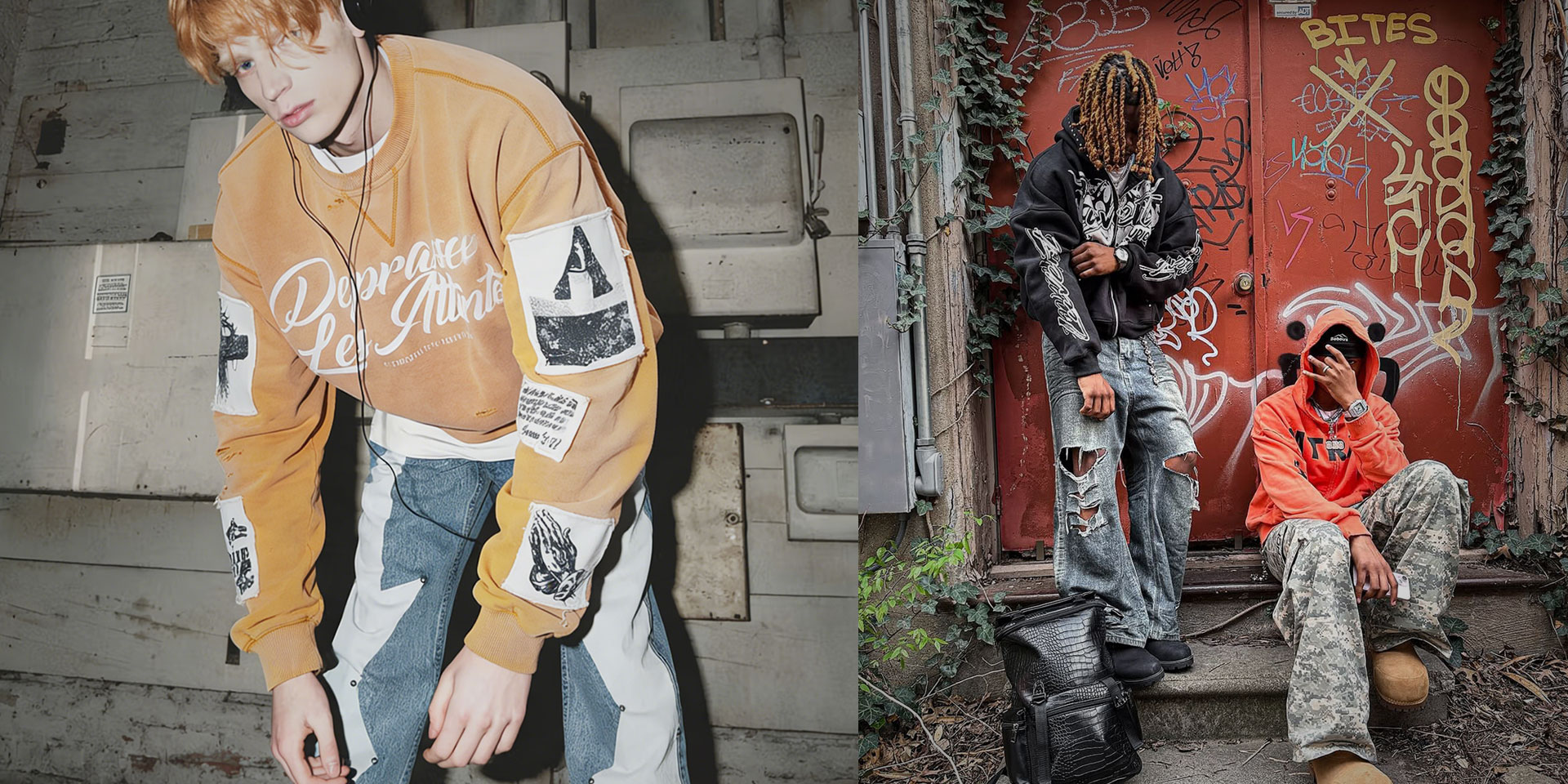 streetwear clothing manufacturers custom streetwear manufacturer Groovecolor streetwear manufacturers Groovecolor custom streetwear manufacturer